
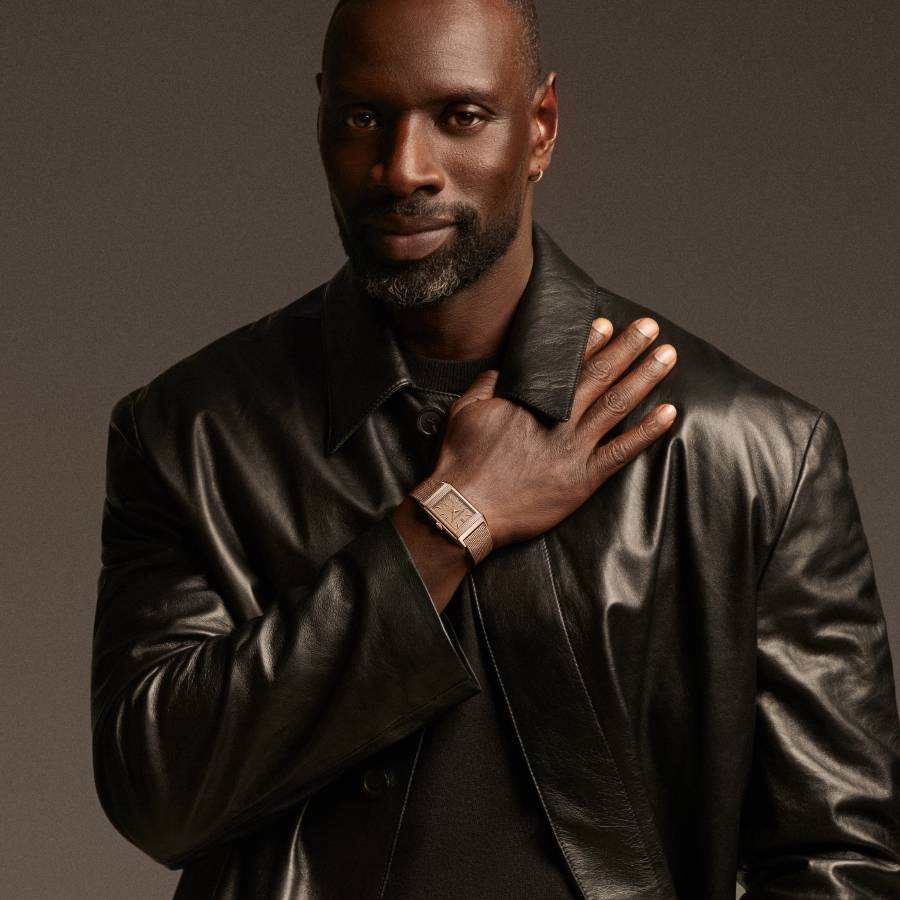
Avec plus de 40 films et séries à son actif, tant en français qu’en anglais, Omar Sy s’est imposé comme un acteur et producteur de premier plan des deux côtés de l’Atlantique. Né en 1978 à Trappes, dans la banlieue populaire de Paris, il a débuté sa carrière il y a 30 ans avec des sketchs humoristiques à la radio, puis à la télévision en duo avec Fred Testot. Sa performance dans Tellement proches (2009), son premier long métrage avec Éric Toledano et Olivier Nakache, a convaincu les réalisateurs-scénaristes de le choisir pour Intouchables deux ans plus tard. Devenu l’un des plus grands succès du cinéma français, le film l’a propulsé sur le devant de la scène internationale, lui valant également le César du Meilleur acteur. Au-delà de ses activités d’acteur et de producteur, Omar Sy s’implique de plus en plus dans l’entrepreneuriat et l’investissement, en particulier dans le domaine du sport. Depuis 2025, il est ainsi copropriétaire et actionnaire du Paris Basketball, l’un des principaux clubs professionnels français de basket-ball, preuve de son engagement de longue date pour ouvrir de nouvelles perspectives destinées aux jeunes et développer ce sport en France et à l’international.
THE HOUR BEFORE : LES MOMENTS INVISIBLES QUI PRÉCÈDENT LE SUCCÈS
Jaeger-LeCoultre présente son partenariat avec Omar Sy dans un nouvel épisode de The Hour Before, sa série consacrée aux instants, souvent secrets, qui précèdent les exploits marquants. Plus qu’un simple documentaire, elle invite à réfléchir à ce qui se passe avant que le succès ne devienne visible. Avant le rôle qui vous révèle. Avant l’ovation qui vous acclame. Avant l’évènement qui va changer votre vie. Ces moments de calme alliant incertitude, préparation et persévérance. La série explore ces heures dans lesquelles les choix se font, les convictions sont mises à l’épreuve, les ambitions prennent forme. Dans un cadre intimiste qui révèle leur sincérité, les personnes interviewées partagent les expériences qui ont métamorphosé leur histoire, et ce bien avant qu’elles ne soient sous les projecteurs. Ces instants, Omar Sy en a souvent vécus : ces décisions qui ont bousculé les préjugés, ces risques qui lui ont ouvert de nouvelles perspectives et cette détermination qui l’a guidé d’un chapitre à l’autre de sa carrière. Son histoire incarne l’esprit de The Hour Before : la conviction que l’excellence est le fruit d’innombrables heures de travail, dédiées à son métier et invisibles aux yeux de tous.
OMAR SY Q&A THE HOUR BEFORE
French Lover marked a return to comedy after several years of dramatic and action roles internationally. Critics have noted how the film balances lightness with emotional depth. How did it feel to return to that register, and what did you want to bring to it that felt new?
Coming back to comedy felt very natural because that is where I started. Before people knew me through dramas or action projects, comedy was my language. But I didn’t want to simply revisit something familiar. What interested me was exploring comedy through the lens of experience. As you get more experience, you carry different emotions, different responsibilities, and different perspectives. What I loved about French Lover was that it allowed humour and vulnerability to exist together. Life is like that. The funniest moments are often very close to the most human ones. I wanted to bring that complexity to the character and show that comedy can reveal something profound about people, not just entertain them.
• With Lupin Season four on the horizon and Dumas: Black Devil due in 2027, you are simultaneously playing one of your most iconic contemporary characters and preparing to embody a real historical figure. How do you hold those two very different creative worlds at the same time?
What connects them is curiosity. Assane Diop is a character built from imagination, intelligence and movement. Alexandre Dumas is a historical figure whose life influenced literature and culture in a very real way. The preparation is completely different, but the responsibility is similar. With Assane, I am always asking, “What would surprise people next?” With Dumas, I am asking, “Who was this man beyond the myth?” One role looks forward, the other looks back. For an actor, having both worlds at the same time is a gift because they challenge different parts of your creativity.
• As artistic producer on Lupin, you are now shaping the story as much as performing it. Has this producing role changed the way you approach your own performance, and the way you see the project as a whole?
Absolutely. As an actor, your focus is naturally on your character and your scenes. As a producer, you are thinking about the entire ecosystem: the story, the audience, the rhythm, the long-term vision. It has made me more aware of how every creative decision affects the whole project. At the same time, when I step in front of the camera, I try to forget some of that responsibility and trust the character. The challenge is knowing when to wear each hat. But it has given me a deeper appreciation for collaboration and for everything that happens behind the scenes.
REFLECTING ON THE HOUR BEFORE PEAK EXPERIENCES
• You’ve had several transformative roles throughout your career. Is there one that stands out as a turning point for you artistically?
What was the journey leading up to it? Of course, The Intouchables remains a turning point. Not only because of its success, but because it changed the way people saw me and the way I saw my possibilities as an actor. The journey leading up to it was years of learning, performing, making mistakes, and building confidence. Nothing happened overnight. When that opportunity arrived, I was ready to embrace it because of everything that came before. Looking back, the role felt like a door opening onto a much larger world.
• Was there a moment early in your life or career, perhaps even before The Intouchables, when you realised that acting would become something bigger in your life than you had imagined?
What sparked that realisation? I don’t think there was one dramatic moment. It happened gradually. In the beginning, performing was about joy. I loved making people laugh. Then I started to realise that stories could connect people from very different backgrounds. When I saw audiences reacting emotionally – not just laughing, but recognising themselves in a character – I understood that acting could have a deeper impact. That was when it became more than a job or an ambition. It became something meaningful.
• What does ‘The Hour Before’ mean to you – the moment when no one is watching, but everything you have worked for is about to come to life?
For me, that hour is about gratitude. It is one of the rare moments where everything becomes quiet. Before a premiere, before stepping onto a set, before an important scene, there is a moment when you are alone with your thoughts. You remember the work, the people who helped you get there, the risks you took. The outcome is still unknown, and there is something beautiful about that uncertainty. That hour reminds me why I do this in the first place.
COLLABORATION WITH JAEGER-LECOULTRE
• You have spoken about appreciating pieces that carry meaning through their design and craftsmanship. How do you see that same philosophy reflected in your own approach to your work?
The details matter. Often, the audience doesn’t consciously notice them, but they feel them. Whether it is a watchmaker refining a movement or an actor shaping a performance, there is a commitment to excellence that exists behind the finished result. I believe the most meaningful work comes from patience, precision and respect for the craft. Those values resonate with me deeply.
• Jaeger-LeCoultre is built on the idea that mastery is cultivated over time. Does that resonate with how you think about your own evolution as an actor and producer?
Very much so. Experience teaches humility. Every project reminds you that there is still more to learn. When I was younger, success felt connected to achievement. Today, I think more about growth. Mastery is not a destination; it is a relationship with your craft. You keep refining, questioning and evolving. That philosophy feels very close to my own journey.
• Jaeger-LeCoultre has a legacy of blending creative innovation with mechanical excellence. Is there a particular timepiece in the collection that resonates with your own creative journey, balancing legacy and reinvention?
I’ve always admired the Jaeger-LeCoultre Reverso because it embodies both tradition and transformation. It has an iconic identity, but it continues to evolve while remaining true to its origins. As an actor, I relate to that idea. You carry your history with you, but you also have to keep discovering new versions of yourself. Reinvention is meaningful when it grows from authenticity.
STYLE AND WATCHES
• Your style has often been described as effortlessly understated, confident without being loud. Is that something you consciously cultivate, or does it come naturally? And how does a Jaeger-LeCoultre timepiece resonate with that sense of elegance and authenticity, both on and off camera?
I think it comes naturally. I’ve never been drawn to things that demand attention for their own sake. I prefer pieces that reveal themselves over time. What I appreciate about Jaeger-LeCoultre is that its elegance feels confident rather than performative. There is a quiet sophistication to it. Whether you’re on a film set or spending time with family, it feels authentic rather than symbolic. That’s a quality I value.
• For you, is a watch primarily a design object, a statement of craftsmanship, or something more personal?
It begins with craftsmanship, but over time it becomes personal. A watch accompanies you through experiences, milestones and memories. It marks moments in a very intimate way. The longer you wear it, the more it becomes part of your story. That’s what gives it emotional value beyond its design or technical achievement.
• Jaeger-LeCoultre embodies a balance between tradition and innovation. How does that tension show up in the way you approach your own style?
I think style, like creativity, is strongest when it respects both. Tradition gives you a foundation. Innovation keeps you moving forward. In my work and in my personal style, I try not to chase trends. Instead, I look for things that feel timeless but still have a sense of freshness. The goal isn’t to choose between tradition and innovation – it’s to find the conversation between them. That’s where character lives.
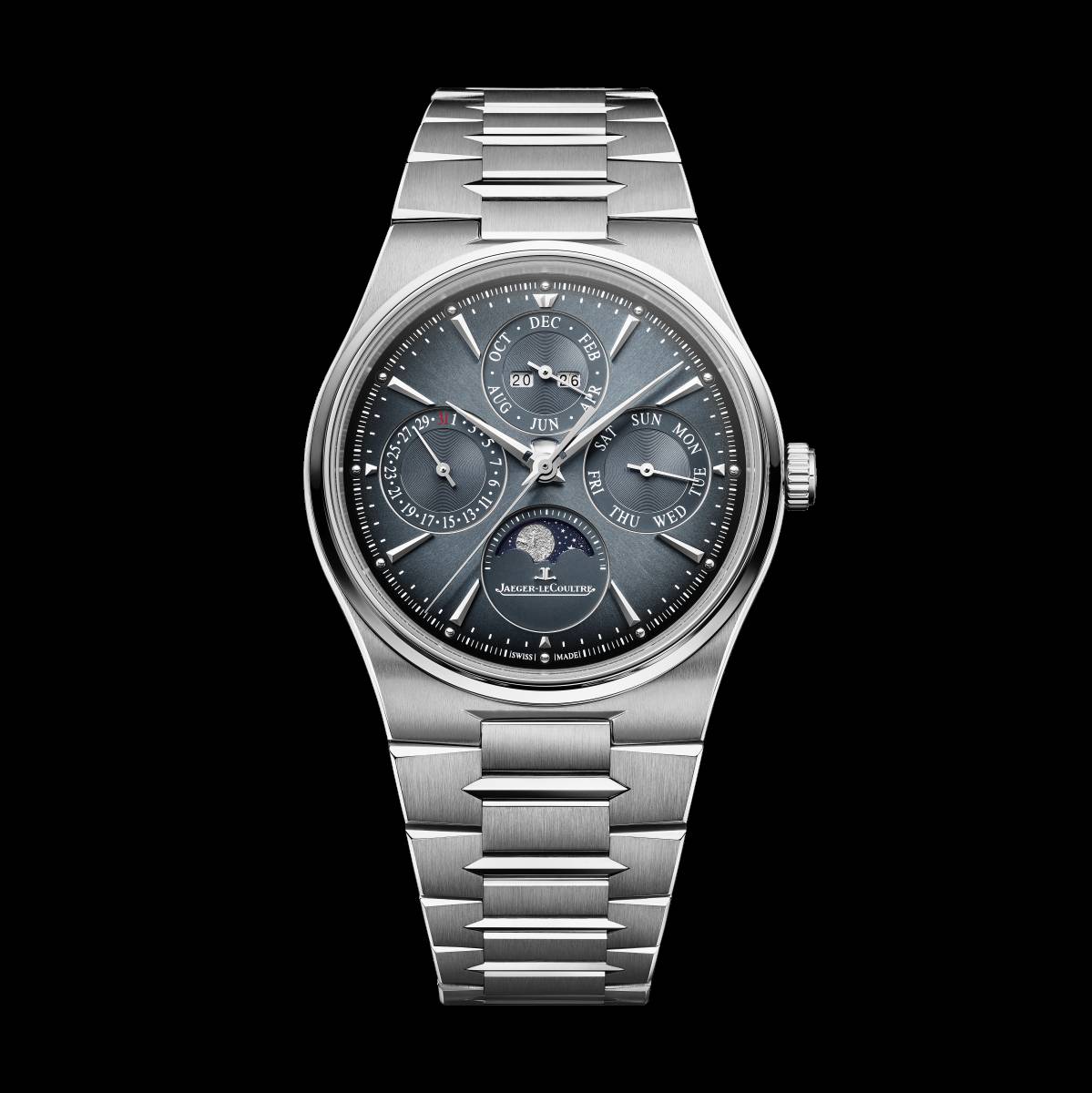
Master Control Chronometre Perpetual Calendar
A voir aussi sur artsixMic :
Rencontre avec Mr. Sun Laichun, Founder of Chinese cosmetics brand Forest Cabin
Barbara Polla à la rencontre de Brigitte Lahaie
KYLIE SHEA une artiste aux multiples talents : Interview !
Rencontre, Interview avec Adélaïde Leferme
Rencontre, Interview avec Samantha McEwen !
Flore Cherry – Ambassadrice de JOYclub – Interview
Dominique Trinquand : Ce qui nous attend !
Thérèse – No Rules – Interview
Aya Okuyama – Piano – Interview !
Maral Artinian – Marli – Interview !
Camille Vever : Dans l’intimité de Vever !
Eliane Umuhire – Trees of Peace – Interview
Maïa Barouh – chinXoise – Interview
Lux the band – Gravity – Interview
Barbara Polla : La Favorite – Interview !
Déborah Sportes “Double Je”- Interview !
Madame Najat Vallaud-Belkacem – Interview !
AUGUSTE artiste POP protéiforme – Interview !
Valérie Valton : Plongée avec Dolphinesse !
Sylvie Lancrenon : Comme au cinéma !
Mahdavi – Gouaned : Cerise sur le gâteau !
Aquarelle : Des fleurs à la maison !
ATELIER COS : Carte Blanche !
Chayan Khoï et le Paradis Bleu