
With more than 200 works and documents — including paintings, drawings, photographs, garments, film footage, jewellery and objects — on loan from some of the world’s most important international collections, the exhibition “Dalí e la Moda ” has opened at Palazzo Reale in Milan and will remain on view until 31 January 2027.
The exhibition brings together works from the Gala-Salvador Dalí Foundation in Figueres, the Dalí Museum in St. Petersburg, and the Museo Nacional Centro de Arte Reina Sofía in Madrid, offering an in-depth exploration of the profound relationship between Salvador Dalí and the world of fashion. The scientific direction is entrusted to Montse Aguer, director of the Dalí Museums.
The exhibition is curated by Laura Bartolomé, Deputy Director of Research and Projects at the Gala-Salvador Dalí Foundation, and Judith Clark, fashion historian and professor at the University of the Arts London. Curators Lucia Moni and Bea Crespo also contributed to the project. The exhibition examines fashion as an integral part of Dalí’s artistic research, avoiding any separation between his artistic practice and his work on the design of garments, accessories, jewellery, stage sets and advertising imagery.
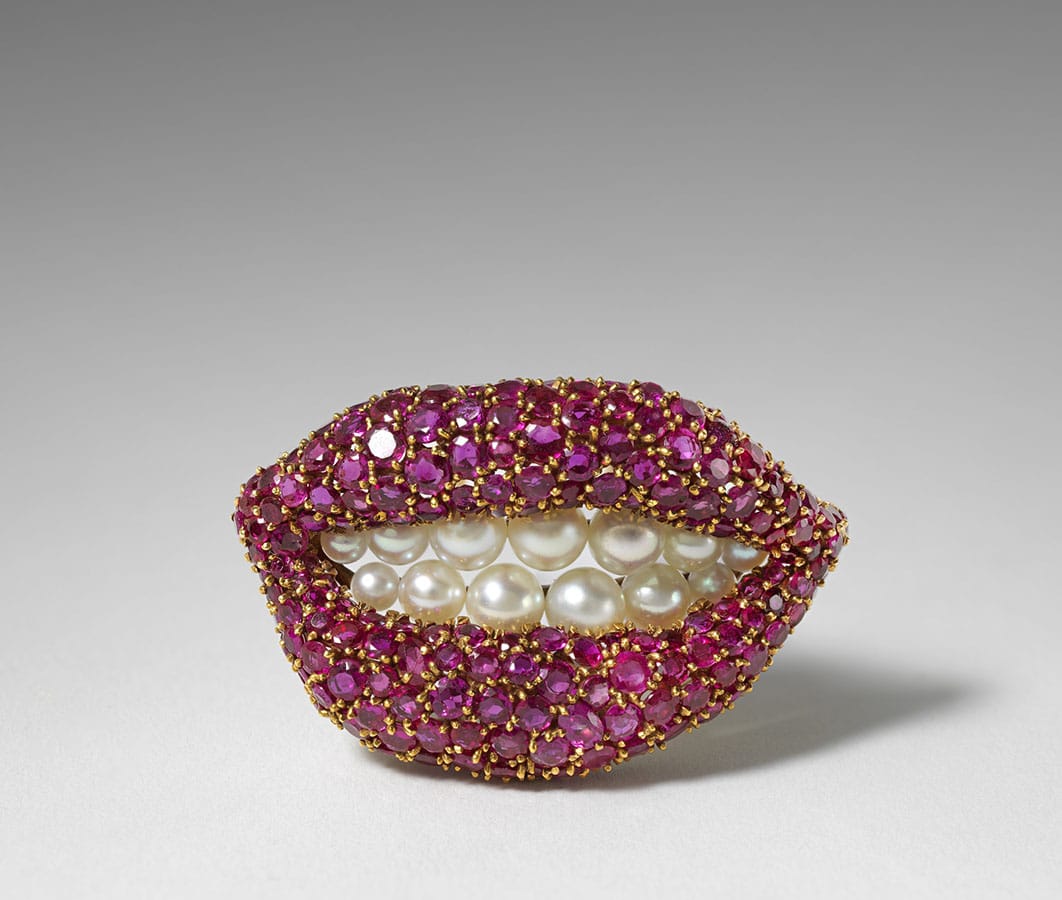
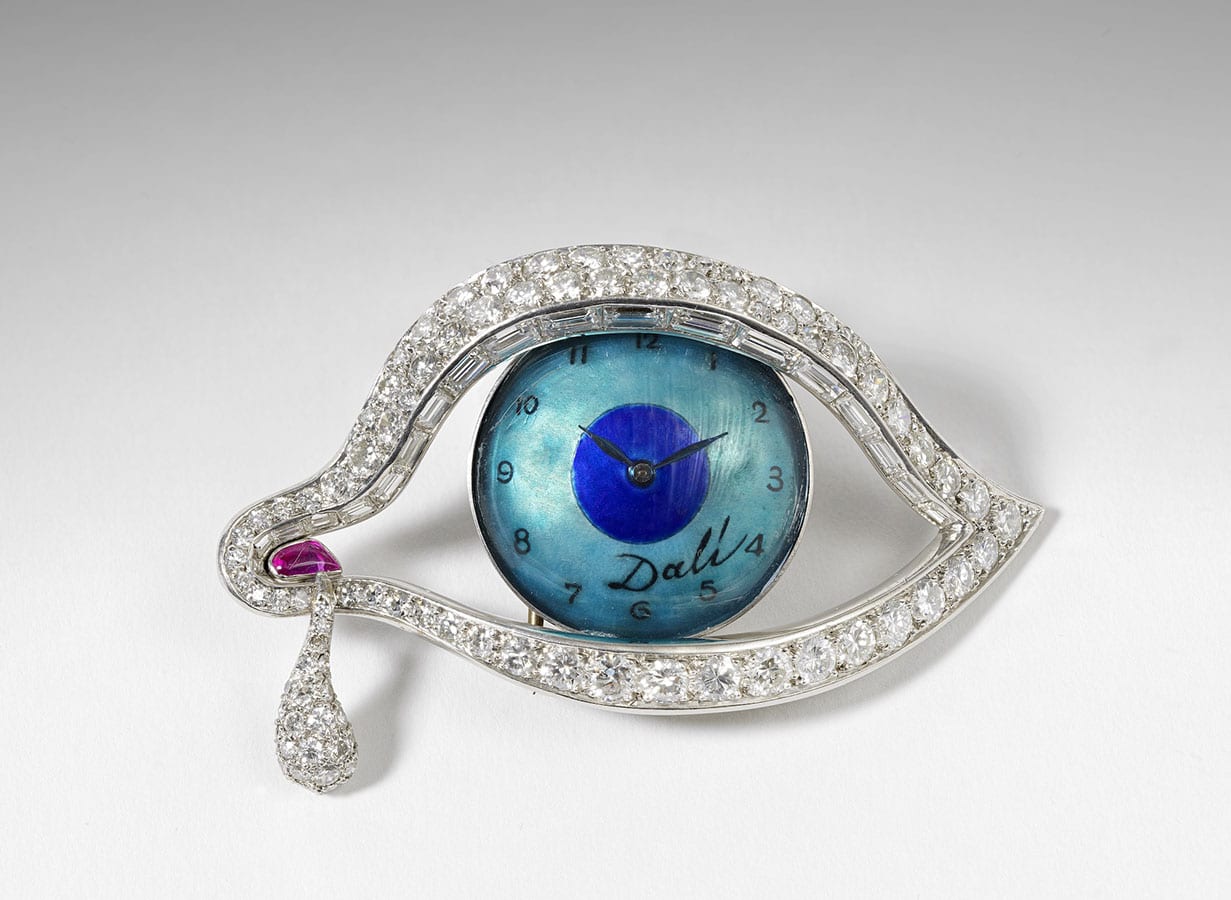
Painting, photography, costume and visual communication thus become complementary languages within a single exploration of the image. The exhibition’s key image is Dalí’s 1936 painting, “Three Young Surrealist Women Holding in Their Arms the Skins of an Orchestra,” displayed alongside two celebrated pieces of jewellery from 1949: “The Eye of Time,” made in platinum and diamonds by jeweller Carlos Alemany, and the famous sculptural brooch “Lips,” made of rubies, gold and pearls, created in collaboration with jeweller Henryk Kaston.
In 1929, Gala entered the artist’s life and gradually became part of a shared language of clothing, accessories and imagery. Through their wardrobes, the couple constructed a carefully defined public image. Gala’s wardrobe featured creations by Elsa Schiaparelli, Christian Dior, Coco Chanel, Pierre Cardin, Hubert de Givenchy, Gucci and Emilio Pucci. Dalí’s wardrobe, by contrast, was more eclectic, incorporating elements associated with public appearances, performances and the theatrical construction of his own image.
An important section is devoted to Dalí’s collaboration with Elsa Schiaparelli, which began in 1936 with the first window display Dalí created for the designer at Bonwit Teller department store in New York. The artist’s imagery gradually entered garments, accessories, jewellery, costumes, textiles, illustrations and advertising campaigns. Clothing thus became a tool for transforming and reinventing the body, introducing ironic, erotic and unsettling elements. Through the international circulation of fashion magazines, images of these creations reached an increasingly broad audience, turning fashion into a powerful vehicle for the dissemination of Surrealist imagery.
Dalí’s relationship with Coco Chanel also extended into the theatre. In 1939, Dalí designed the sets and wrote the libretto for a production by the Ballets Russes de Monte Carlo, for which Chanel collaborated on the costumes. Theatre became another space in which art, fashion, performance and image could merge. Between 1966 and 1969, in Portlligat, Cadaqués, Barcelona and Paris, Dalí involved models and performers in the creations of Paco Rabanne, including Elsa Peretti, Donyale Luna and Amanda Lear. Fashion increasingly became a space for experimentation with the body and identity, in keeping with the spectacular and provocative dimension of the artist’s work.
“Dalí e la Moda ” explores a field in which painting, photography, clothing, jewellery, theatre and advertising overlap. The exhibition also considers fashion as a means of producing images and shaping mass culture, highlighting the continuity of Dalí’s work and its enduring presence in the visual imagination of contemporary designers, creative directors, photographers and artists. More than simply an encounter between art and fashion, the exhibition tells the story of the construction of a visual language in which the body, clothing and image become part of the same inexhaustible creative machine: that of Salvador Dalí.
Dali e la Moda : Palazzo Reale Milan from 24 September 2025 to 31 January 2027
From Tuesday to Sunday : 10.00 am to 19.30 Thursday : closing time 22.30
- Text Romana Barba
- Photo Credit Civita Mostre e Musei